Slang gives everyday speech personality. It can show where someone grew up, who they spend time with, and how casually they want to communicate.
The phrase “hillbilly slang” is commonly used online to describe informal expressions associated with rural Appalachian, Southern, and other mountain communities, although these regions have many distinct dialects and traditions. The label hillbilly itself can be playful in some contexts but insulting in others, so it is worth using carefully.
Expressions such as reckon, fixin’ to, over yonder, and right smart have lasted because they are vivid, conversational, and easy to understand from context. Some are still heard naturally, while others sound more old-fashioned or regional today.
Slang also changes constantly. Social media can spread a regional phrase far beyond its original community, while younger speakers may shorten, remix, or replace older expressions. Understanding that history makes these words more interesting—and helps you use them without sounding forced.
Quick Reference Table
| Slang Term | Meaning | Tone | Age Group | Online/Offline Usage |
|---|---|---|---|---|
| Reckon | Think, suppose, or believe | Casual | All ages, especially older speakers | Mostly offline |
| Fixin’ to | About to do something | Casual | Millennial and older | Both |
| Y’all | You all | Friendly | All ages | Both |
| Over yonder | Over there, usually some distance away | Folksy | Older and regional speakers | Mostly offline |
| Holler | Small valley or secluded mountain road/community | Regional | All ages in affected regions | Both |
| Right smart | A good amount or quite a lot | Folksy | Older speakers | Mostly offline |
| Ain’t | Informal form of “isn’t,” “aren’t,” or “haven’t” | Very casual | All ages | Both |
| Cattywampus | Crooked, uneven, or out of place | Playful | Older and regional | Both |
| Tarnation | Mild expression of surprise or frustration | Old-fashioned | Older speakers | Mostly offline |
| Kin | Family or relatives | Traditional | All ages | Both |
| Skedaddle | Leave quickly | Playful | All ages, often humorous | Both |
11 Hillbilly Slang Terms
Reckon
- Meaning: “Reckon” usually means think, suppose, or believe. It can make an ordinary opinion sound relaxed and distinctly regional.
- When to Use It: Use it in casual conversation when you want to say what you think without sounding overly formal.
- When NOT to Use It: Skip it in academic papers, business reports, or situations where precise formal wording matters.
- Example in Conversation:
A: “You reckon the rain will stop?”
B: “I reckon it’ll clear up by supper.” - Is It Still Trending? Yes — especially in regional speech, country-themed media, and informal writing.
Fixin’ to
- Meaning: This expression means getting ready or preparing to do something soon. “I’m fixin’ to leave” means the person intends to leave shortly.
- When to Use It: It works naturally in relaxed speech, especially when describing something you are about to do.
- When NOT to Use It: Avoid it when writing formal instructions or professional correspondence.
- Example in Conversation:
A: “Are you heading out?”
B: “Yep, I’m fixin’ to leave now.” - Is It Still Trending? Yes — it remains recognizable and actively used in Southern and Appalachian speech.
Y’all
- Meaning: “Y’all” means you all and is one of the most widely recognized regional forms that has crossed into mainstream American communication.
- When to Use It: Use it when speaking casually to two or more people. It is also common online because it is short and friendly.
- When NOT to Use It: There is no major social restriction, but extremely formal documents may call for “you” or “you all.”
- Example in Conversation:
A: “Y’all coming with us?”
B: “Sure, we’ll be ready in ten minutes.” - Is It Still Trending? Yes — very much so, including outside the South.
Over Yonder
- Meaning: “Over yonder” points to a place over there, often suggesting that it is farther away or visually distinct from where the speaker is standing.
- When to Use It: It fits casual storytelling and conversations where a relaxed, regional flavor feels natural.
- When NOT to Use It: Don’t force it simply to imitate a rural accent or stereotype.
- Example in Conversation:
A: “Where’d you park the truck?”
B: “Over yonder by the old barn.” - Is It Still Trending? Declining — still understood, but strongly folksy and regional.
Holler
- Meaning: In Appalachian usage, a holler commonly refers to a narrow mountain valley or the road/community located within one. It is much more than simply a loud shout in this context.
- When to Use It: Use it when discussing Appalachian geography, family communities, or rural mountain settings where the regional meaning is appropriate.
- When NOT to Use It: Don’t assume every rural person uses “holler,” and don’t use it as a generic substitute for “neighborhood.”
- Example in Conversation:
A: “Where does your uncle live?”
B: “Up in the next holler past the creek.” - Is It Still Trending? Yes — particularly in Appalachian communities and cultural storytelling.
Right Smart
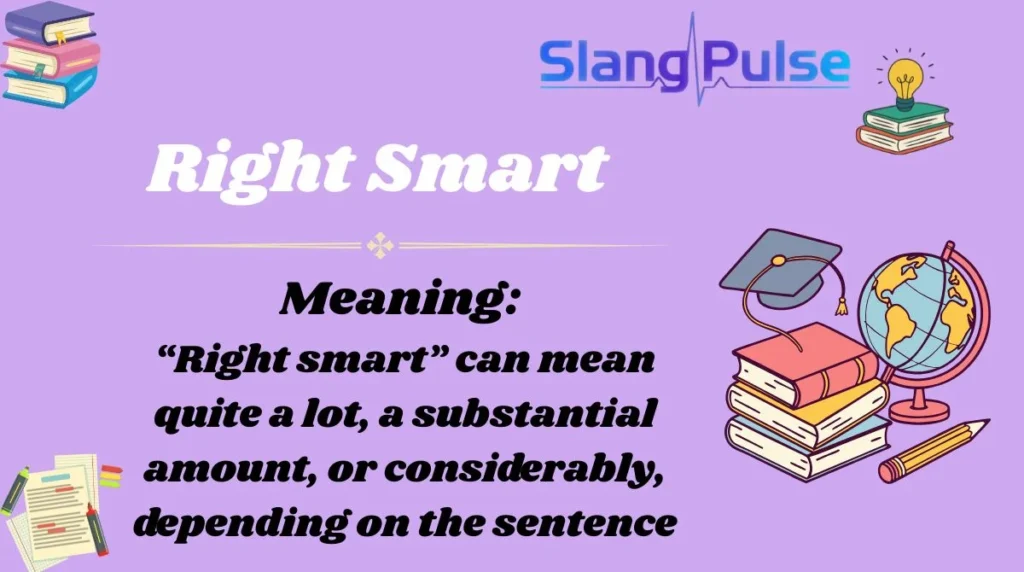
- Meaning: “Right smart” can mean quite a lot, a substantial amount, or considerably, depending on the sentence. It has an unmistakably old-time conversational flavor.
- When to Use It: It works best in informal speech or writing that intentionally preserves a regional voice.
- When NOT to Use It: Avoid it if you are trying to sound neutral or highly contemporary.
- Example in Conversation:
A: “Did you get much done today?”
B: “We got a right smart amount finished.” - Is It Still Trending? Old School — recognizable but less common among younger speakers.
Ain’t
- Meaning: “Ain’t” is a long-established informal form that can stand in for several negatives, including isn’t, aren’t, hasn’t, or haven’t, depending on context.
- When to Use It: It is natural in relaxed conversation, dialogue, music, and informal storytelling.
- When NOT to Use It: Avoid it in formal academic or professional writing unless you are intentionally reproducing someone’s speech.
- Example in Conversation:
A: “Ain’t you coming with us?”
B: “Not tonight—I’ve got work to finish.” - Is It Still Trending? Yes — it appears across many American dialects and is not exclusive to rural speech.
Cattywampus
- Meaning: Something described as cattywampus is crooked, uneven, misaligned, or sitting in an awkward position. The word itself often adds humor to a minor problem.
- When to Use It: Use it playfully when something is physically out of place.
- When NOT to Use It: Don’t treat it as a universal “hillbilly” word; regional vocabulary varies considerably.
- Example in Conversation:
A: “Why won’t this shelf sit right?”
B: “Because you’ve got it all cattywampus.” - Is It Still Trending? Declining — familiar to many Americans but more common in playful or regional speech.
Tarnation
- Meaning: “Tarnation” is a mild, old-fashioned exclamation used to express surprise, irritation, or disbelief without using profanity.
- When to Use It: It fits humorous storytelling, fictional dialogue, or deliberately old-fashioned speech.
- When NOT to Use It: Don’t use it constantly in everyday conversation unless that style genuinely fits your voice.
- Example in Conversation:
A: “The tire’s flat again.”
B: “What in tarnation happened this time?” - Is It Still Trending? Old School — mostly heard in humorous, nostalgic, or fictional contexts.
Kin
- Meaning: “Kin” means family or relatives. It is simple, but it carries a traditional rural and Appalachian feel in phrases such as “my kin.”
- When to Use It: It works naturally when talking about relatives, family history, or close family networks.
- When NOT to Use It: Avoid using it as a costume-like substitute for “family” simply to sound rural.
- Example in Conversation:
A: “Who’s coming to the reunion?”
B: “Most of my kin will be there.” - Is It Still Trending? Yes — especially in regional and family-centered speech.
Skedaddle
- Meaning: “Skedaddle” means leave or move away quickly. Unlike some regional expressions, it has become widely recognizable and can sound deliberately playful.
- When to Use It: Use it jokingly when telling someone to hurry away or describing a quick departure.
- When NOT to Use It: It can sound silly in serious situations, so match the word to the mood.
- Example in Conversation:
A: “That storm’s getting close.”
B: “Then we’d better skedaddle home.” - Is It Still Trending? Declining — still understood, but often used humorously rather than as ordinary everyday slang.
Generational Slang Comparison
Gen Z Usage
Gen Z is more likely to encounter rural expressions through TikTok, memes, country music, television, gaming communities, and short-form videos than through traditional regional speech. Words such as y’all can feel completely normal online, while expressions like “tarnation” may be used ironically.
Millennials
Millennials often recognize these expressions through family speech, Southern media, movies, music, and internet culture. Reckon, fixin’ to, and y’all can sound natural when used by someone familiar with the dialect.
Older Speakers
Older rural and Appalachian speakers may use regional expressions without thinking of them as “slang.” For them, words such as holler, kin, reckon, and over yonder can simply be part of everyday local speech.
How to Use Slang Naturally Without Sounding Awkward
Match the Tone
A playful expression such as skedaddle or tarnation works best when the conversation is light. Don’t insert an old-fashioned phrase into every sentence.
Understand the Context
Some words have meanings that depend on regional usage. Holler, for example, can refer to a mountain valley rather than someone shouting.
Respect the Social Setting
“Rural slang” is not one single dialect. Appalachian, Southern, Ozark, and other rural speech communities have their own vocabulary and pronunciation patterns. Listen to how people actually speak rather than building a character around stereotypes.
Common Slang Mistakes
Using Outdated Slang
Words such as tarnation can sound humorous or theatrical today. That’s fine when intentional, but they may sound unnatural in ordinary conversation.
Using Slang in Formal Writing
Expressions such as ain’t and fixin’ to can work beautifully in dialogue but may weaken the tone of an academic essay, formal report, or professional email.
Overusing Slang
Using one natural regional expression can add personality. Filling every sentence with rural slang usually does the opposite and can make the speaker sound like they are imitating a stereotype.
Practice Section
Fill in the Blanks
- “I ________ we’ll get there before dark.”
- “I’m ________ to head home.”
- “The truck is parked over ________.”
- “Most of my ________ are coming to the reunion.”
- “That picture frame is sitting ________.”
- “We’d better ________ before the storm arrives.”
- “________ you all ready to go?”
- “What in ________ is going on?”
Choose the Correct Slang
1. Which expression means “about to do something”?
A. Kin
B. Fixin’ to
C. Holler
D. Right smart
2. Which word can mean “family members”?
A. Kin
B. Yonder
C. Tarnation
D. Skedaddle
3. What does “over yonder” generally indicate?
A. Yesterday
B. Over there
C. Very quickly
D. Very loudly
4. Which expression can describe something crooked or misaligned?
A. Reckon
B. Holler
C. Cattywampus
D. Y’all
5. Which term is strongly associated with an Appalachian mountain valley?
A. Holler
B. Skedaddle
C. Ain’t
D. Tarnation
Rewrite These Formal Sentences Into Casual Slang
- “I believe we should leave before the weather gets worse.”
- “I am about to go home.”
- “Your relatives will arrive this afternoon.”
FAQs
What Is Hillbilly Slang?
“Hillbilly slang” is an informal label for expressions associated with rural mountain or Appalachian and Southern speech. The term can be stereotypical, so regional language is better understood on its own terms.
Is Hillbilly Slang Still Used in 2026?
Yes. Some expressions remain everyday regional speech, while others survive mainly through humor, media, storytelling, and older generations.
Is “Y’all” Hillbilly Slang?
Not specifically. Y’all is strongly associated with Southern English but is now widely used throughout the United States and online.
What Does “Reckon” Mean?
Reckon generally means think, suppose, or believe in casual conversation.
What Does “Fixin’ to” Mean?
Fixin’ to means about to do something or preparing to do it soon.
Is “Hillbilly” an Offensive Word?
It can be. Some people use it playfully or as a self-description, while others consider it insulting. Context and the speaker’s relationship to the term matter.
Conclusion
Regional slang is more than a collection of funny words. Expressions such as reckon, fixin’ to, y’all, holler, and over yonder can reveal history, geography, family traditions, and changing American speech patterns.
At the same time, calling every rural expression “hillbilly slang” can flatten important differences between Appalachian and other Southern communities.
The best approach is context, accuracy, and moderation. Learn what a phrase actually means, understand where it comes from, and use it naturally rather than performing a stereotype.
Slang works best when it sounds like something a real person would say—not something copied from a character.

Aira is a content writer and language enthusiast at SlangPulse, specializing in internet slang, social media trends, and modern digital communication