British slang has a special talent for making ordinary situations sound unexpectedly funny. A person can be annoyed, surprised, tired, impressed, or completely confused—and somehow a short slang expression makes the whole moment more entertaining.
That is one reason British slang remains popular far beyond the UK, especially on social media, in films, gaming communities, group chats, and everyday online conversations.
Slang is more than a collection of unusual words. It reflects humor, local identity, friendship, age, and the way people communicate within a particular social group. Expressions can become popular quickly, fade away, or take on a slightly different meaning among younger speakers.
Some British phrases that once sounded strongly regional are now recognized internationally, while newer expressions continue to emerge through TikTok, YouTube, music, and internet culture.
The funny side of British slang is particularly interesting because many expressions sound completely harmless until you understand what they actually mean. Below are 14 amusing British slang terms, with examples showing how they work naturally in conversation.
Quick Reference Table
| Slang Term | Meaning | Tone | Age Group | Online/Offline Usage |
|---|---|---|---|---|
| Banter | Playful teasing or joking | Friendly | Gen Z & Millennials | Both |
| Knackered | Extremely tired | Casual | All ages | Both |
| Gobsmacked | Extremely surprised | Humorous | Millennials & older | Both |
| Taking the mick | Making fun of someone | Playful | All ages | Both |
| Bollocks | Nonsense; also a mild swear word | Informal | Adults | Both |
| Dodgy | Suspicious, unreliable, or questionable | Casual | All ages | Both |
| Wanker | Insult for an unpleasant or foolish person | Rude | Adults | Mostly offline |
| Chuffed | Very pleased | Positive | Millennials & older | Both |
| Gutted | Extremely disappointed | Emotional | All ages | Both |
| Ignorant | Silly or foolish | Mild | All ages | Both |
| Pissed | Drunk in British English | Casual | Adults | Both |
| Bugger | Mild exclamation or insult | Humorous/Rude | Adults | Both |
| Faff | Waste time doing unnecessary things | Lighthearted | Millennials & older | Both |
| Blimey | Expression of surprise | Old-fashioned/funny | Older speakers | Both |
Slang: Banter
Meaning:
“Banter” is playful joking between people who are comfortable with each other. It can involve teasing, sarcastic comments, exaggerated insults, or deliberately ridiculous remarks. The important part is the social relationship behind it: genuine banter is usually understood as fun rather than a serious attack.
When to Use It:
- When friends are teasing each other.
- When a group is joking around.
- When describing a funny exchange.
When NOT to Use It:
- When someone is genuinely upset.
- When the comment targets a sensitive subject.
- In a serious professional conversation.
Example in Conversation:
“You really wore that shirt again?”
“Relax, mate. It’s just banter.”
Is It Still Trending?
Yes. It remains one of the most recognizable British expressions for friendly teasing.
Slang: Knackered
Meaning:
If a British speaker says they are “knackered,” they are not merely a little tired. They are saying they have practically run out of energy. It is perfect after a long shift, exhausting journey, intense workout, or night out.
When to Use It:
- After a tiring day.
- When you desperately need sleep.
- In casual conversations with friends or colleagues.
When NOT to Use It:
- In highly formal writing.
- When speaking to someone unfamiliar with British English and clarity matters.
Example in Conversation:
“Fancy going out tonight?”
“Absolutely not. I’m knackered.”
Is It Still Trending?
Yes. It is common across several generations.
Slang: Gobsmacked
Meaning:
“Gobsmacked” describes being so surprised that you almost have no words. The image behind the expression is wonderfully dramatic: your mouth is effectively left hanging open.
When to Use It:
- When something genuinely shocks you.
- For surprising news or unexpected results.
- In humorous storytelling.
When NOT to Use It:
- In formal reports.
- When a neutral phrase such as “surprised” is more appropriate.
Example in Conversation:
“She won the competition?”
“I know! I was absolutely gobsmacked.”
Is It Still Trending?
Yes, but it has a slightly traditional British flavor. Younger speakers may use it humorously.
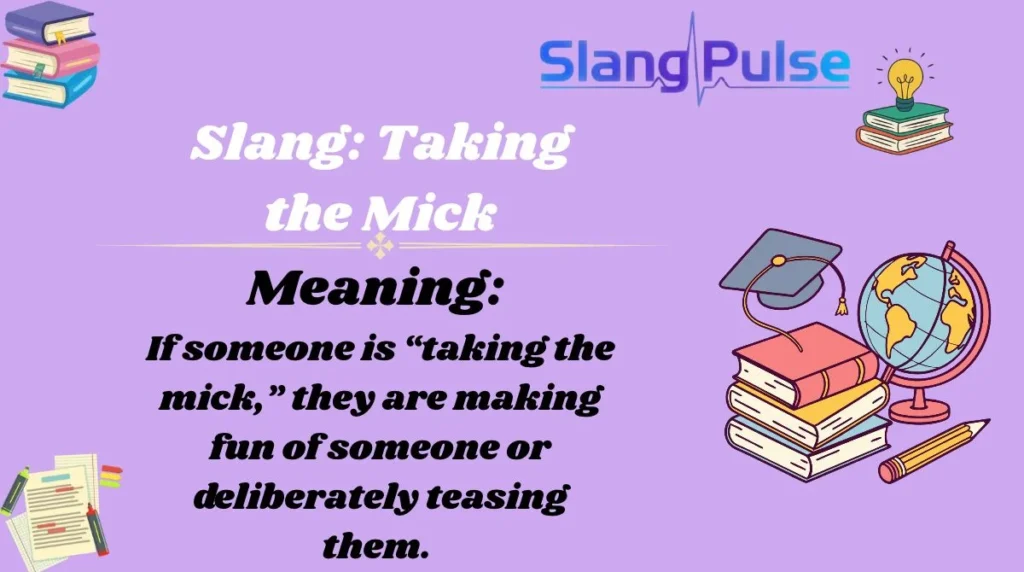
Slang: Taking the Mick
Meaning:
If someone is “taking the mick,” they are making fun of someone or deliberately teasing them. Depending on the situation, it can be friendly or irritating.
When to Use It:
- When a friend is teasing you.
- When someone is exaggerating something for a joke.
- When you want to point out playful mockery.
When NOT to Use It:
- During an argument.
- When the other person clearly does not appreciate the joke.
- In formal communication.
Example in Conversation:
“You actually believe I paid £500 for that?”
“Are you taking the mick?”
Is It Still Trending?
Yes. It remains recognizable and useful in everyday British speech.
Slang: Bollocks
Meaning:
“Bollocks” is a vulgar British expression that can mean nonsense, rubbish, or something considered untrue. It can also appear as an exclamation when someone is annoyed or surprised.
When to Use It:
- Among friends who are comfortable with strong language.
- When humorously rejecting obvious nonsense.
- In informal British conversation.
When NOT to Use It:
- At work when professional language is expected.
- Around children or people who may dislike swearing.
- In formal writing.
Example in Conversation:
“Apparently the train is delayed for another hour.”
“Oh, bollocks.”
Is It Still Trending?
Yes, particularly among adults. Its meaning is well established in British English.
Slang: Dodgy
Meaning:
“Dodgy” is wonderfully flexible. Something can be dodgy because it looks suspicious, works badly, seems dishonest, or simply feels unreliable. British speakers can use it for people, products, deals, websites, food, or situations.
When to Use It:
- When something seems suspicious.
- When a product appears unreliable.
- When describing questionable behavior.
When NOT to Use It:
- When making a serious accusation that requires precise language.
- In official documents.
- When you have no evidence for a serious claim.
Example in Conversation:
“Why aren’t you buying that phone?”
“The website looks a bit dodgy.”
Is It Still Trending?
Yes. It remains extremely useful in everyday British English.
Slang: Wanker
Meaning:
“Wanker” is an insult for someone considered irritating, arrogant, foolish, or unpleasant. It is considerably ruder than playful terms such as “ignorant” and should be treated as profanity.
When to Use It:
- Only in very informal adult conversation.
- Sometimes jokingly among close friends.
- When quoting or discussing British speech.
When NOT to Use It:
- Professional environments.
- Formal conversations.
- Toward strangers unless you deliberately intend to insult them.
Example in Conversation:
“That driver nearly hit three cars.”
“What a wanker.”
Is It Still Trending?
Yes, but it remains clearly vulgar.
Slang: Chuffed
Meaning:
“Chuffed” means very pleased or proud about something. It is one of those British expressions that can sound amusing to people unfamiliar with it because the word itself gives little clue about its positive meaning.
When to Use It:
- After receiving good news.
- When something goes better than expected.
- To express personal satisfaction.
When NOT to Use It:
- In highly formal business writing.
- When speaking to an audience that may misunderstand it.
Example in Conversation:
“You got the job!”
“I’m absolutely chuffed!”
Is It Still Trending?
Yes. It remains familiar, although usage varies by generation and region.
Slang: Gutted
Meaning:
Being “gutted” means being deeply disappointed. It is stronger than simply saying “I’m disappointed,” especially when someone was really hoping for a particular outcome.
When to Use It:
- After plans are cancelled.
- When losing a competition.
- When something you wanted does not happen.
When NOT to Use It:
- For genuinely serious tragedies where casual slang would sound inappropriate.
- In formal reports.
Example in Conversation:
“The concert’s been cancelled.”
“Oh no, I’m gutted.”
Is It Still Trending?
Yes. It remains widely understood in Britain.
Slang: Ignorant
Meaning:
“ignorant” generally means silly, foolish, or slightly ridiculous. It can be affectionate rather than insulting, especially when describing someone’s harmless mistake or strange idea.
When to Use It:
- For playful criticism.
- When someone makes a silly mistake.
- Among friends and family.
When NOT to Use It:
- When criticizing someone seriously.
- In formal evaluations or professional feedback.
Example in Conversation:
“I left my keys inside the house again.”
“You ignorant thing!”
Is It Still Trending?
Yes. It has remained part of everyday British vocabulary for generations.
Slang: Pissed
Meaning:
In British English, “pissed” commonly means drunk. This is important because American English often uses the same word differently, particularly to mean angry.
When to Use It:
- In casual conversations about drinking.
- When describing someone’s drunken state.
- Among adults familiar with British usage.
When NOT to Use It:
- In professional situations.
- Around children.
- When discussing alcohol in a formal context.
Example in Conversation:
“Where’s Tom?”
“He’s upstairs. Completely pissed.”
Is It Still Trending?
Yes. It is common informal British vocabulary, although it is obviously not formal language.
Slang: Bugger
Meaning:
“Bugger” can work as a mild insult, an exclamation, or a reaction to an annoying situation. Its tone changes significantly depending on delivery. “Oh, bugger” might express frustration, while “you little bugger” can sometimes be affectionate among friends.
When to Use It:
- In relaxed adult conversations.
- When joking about a minor problem.
- For humorous reactions.
When NOT to Use It:
- Formal settings.
- Professional correspondence.
- Around people who may find profanity offensive.
Example in Conversation:
“I forgot my wallet.”
“Bugger. You’ll have to go back.”
Is It Still Trending?
Declining slightly. It remains recognizable but can sound old-fashioned or distinctly British.
Slang: Faff
Meaning:
To “faff” means to spend too much time doing small, unnecessary, or inefficient things instead of getting on with the main task. It is perfect for describing someone who is somehow busy without actually accomplishing much.
When to Use It:
- When someone is taking ages to get ready.
- When a simple task becomes unnecessarily complicated.
- When joking about your own procrastination.
When NOT to Use It:
- In formal workplace documentation.
- When a more precise explanation is necessary.
Example in Conversation:
“Why aren’t you ready yet?”
“Stop faffing around and get your shoes on!”
Is It Still Trending?
Yes, although it has a more traditional British feel.
Slang: Blimey
Meaning:
“Blimey” is an expression of surprise, amazement, or mild shock. It has a distinctly British character and can sound particularly funny when used dramatically.
When to Use It:
- When reacting to surprising news.
- In humorous storytelling.
- For a deliberately British-sounding reaction.
When NOT to Use It:
- In formal documents.
- When you need to sound completely neutral.
- If you are forcing it into every sentence simply to sound British.
Example in Conversation:
“The bill came to £200!”
“Blimey! What did you order?”
Is It Still Trending?
Declining. Younger speakers may use it ironically or for comedic effect.
Generational Slang Comparison
British slang changes noticeably between generations, but there is considerable overlap.
Gen Z: Younger speakers often mix traditional British slang with internet expressions, memes, abbreviations, and slang influenced by global social media. Words such as “banter,” “gutted,” and “dodgy” can appear alongside newer online vocabulary.
Millennials: Millennials often understand both older British expressions and newer internet language. Terms such as “knackered,” “chuffed,” “faff,” and “taking the mick” can still feel completely natural.
Older generations: Older British speakers may use expressions such as “blimey,” “ignorant,” “bugger,” and “taking the mick” more naturally. Some expressions have survived across generations, while others now sound humorous or old-fashioned.
The key point is that British slang is not divided into strict age categories. Family, region, class, social circles, and online habits can all influence someone’s vocabulary.
How to Use Slang Naturally Without Sounding Awkward
British slang works best when it fits the relationship and situation.
- Match the tone: “Banter” can be friendly, while “wanker” is an insult. Treat them very differently.
- Read the context: A phrase that works in a group chat may sound strange in a formal meeting.
- Consider the social setting: Friends may appreciate informal expressions, but professional environments usually require more neutral language.
- Listen before copying: Notice how native speakers use an expression rather than simply memorizing its definition.
- Don’t force several slang terms together: One natural expression is usually more convincing than a sentence packed with British slang.
Common Slang Mistakes
Using outdated slang: Some expressions remain understandable but can sound old-fashioned when used seriously. “Blimey” is a good example.
Using slang in formal writing: Job applications, academic work, official emails, and professional reports generally call for standard English.
Overusing slang: Saying “blimey,” “bloody,” “mate,” and “cheers” in every sentence will not make speech sound more British. It usually has the opposite effect.
Ignoring regional differences: British English is not one single accent or slang system. Expressions can vary across England, Scotland, Wales, and Northern Ireland.
Forgetting that some slang is offensive: Words such as “wanker” and “bollocks” carry stronger language than harmless expressions such as “ignorant.”
Practice: Fill in the Blanks
- After working a twelve-hour shift, Sarah said she was completely ________.
- “Are you ________ the mick? That cannot possibly be serious.”
- James was ________ when he discovered his holiday had been cancelled.
- “That website looks a bit ________. I wouldn’t enter my card details.”
- Emma was absolutely ________ after receiving the promotion.
- “I forgot my keys again. I’m so ________.”
- “________! That’s a much bigger house than I expected.”
- Tom spent twenty minutes ________ instead of actually getting ready.
- “What a ________. He was rude to everyone in the restaurant.”
- “I was completely ________ when they announced I had won.”
Answers:
- Knackered
- Taking
- Gutted
- Dodgy
- Chuffed
- ignorant
- Blimey
- Faffing
- Wanker
- Gobsmacked
Choose the Correct Slang
1. Which expression means extremely tired?
A. Chuffed
B. Knackered
C. Gobsmacked
D. Dodgy
Answer: B. Knackered
2. Someone who is “gutted” is usually feeling:
A. Extremely pleased
B. Very confused
C. Deeply disappointed
D. Drunk
Answer: C. Deeply disappointed
3. What does “dodgy” usually suggest?
A. Suspicious or unreliable
B. Extremely expensive
C. Very funny
D. Extremely tired
Answer: A. Suspicious or unreliable
4. Which expression describes playful teasing?
A. Faff
B. Banter
C. Bollocks
D. Pissed
Answer: B. Banter
5. If someone says they are “chuffed,” they are probably:
A. Angry
B. Exhausted
C. Very pleased
D. Suspicious
Answer: C. Very pleased
Rewrite Formal Sentences Into Slang
1. Formal: “I am extremely tired after working all day.”
Slang: “I’m absolutely knackered after working all day.”
2. Formal: “I am extremely disappointed that the event was cancelled.”
Slang: “I’m absolutely gutted the event was cancelled.”
3. Formal: “Are you making fun of me?”
Slang: “Are you taking the mick?”
How To Use This Slang Without Sounding Awkward
Tone Matching
Not every British slang term is equally casual. “ignorant” can be affectionate, while “wanker” is much harsher. Choose expressions according to how friendly, humorous, or confrontational the situation actually is.
Social Awareness
Slang depends heavily on the relationship between speakers. A phrase that makes your close friends laugh may offend someone you have just met.
Audience Awareness
Think about who is listening. British slang can be confusing to international English speakers, and some expressions have different meanings in American English.
Platform Awareness
Text messages, TikTok comments, gaming chats, and private group conversations allow more informal language. LinkedIn posts, business emails, academic assignments, and official communication generally require more standard English.
Don’t Perform the Accent
Using British slang does not require copying a British accent. Natural vocabulary matters more than trying to imitate how someone sounds.
Learn Meaning and Mood Together
Knowing that “gutted” means disappointed is useful, but understanding its emotional intensity is even more important.
Watch for Profanity
“Bollocks,” “wanker,” and some uses of “bugger” are not suitable for every audience. Understanding their strength helps prevent embarrassing mistakes.
Let Slang Appear Naturally
The most convincing slang use is usually simple. One well-placed expression can sound natural; stuffing every sentence with slang can make the conversation feel forced.
FAQs
What is funny British slang?
Funny British slang refers to informal British expressions that can sound humorous because of their unusual wording, cultural associations, or exaggerated way of describing everyday situations. Examples include “knackered,” “gobsmacked,” “faff,” and “taking the mick.”
What is a funny British word for being tired?
“Knackered” is one of the most recognizable British informal words for being extremely tired. For example, someone might say, “I’m absolutely knackered after that journey.”
What British slang sounds funny to Americans?
Expressions such as “knackered,” “gobsmacked,” “faff,” “chuffed,” and “taking the mick” can sound unusual or amusing to American English speakers because their meanings are not always obvious from the words themselves.
Is British slang still used in 2026?
Yes. Many established British slang terms remain part of everyday speech, while younger speakers continually combine traditional expressions with internet slang, regional vocabulary, and language influenced by global social media.
Can I use British slang in everyday English?
Yes, particularly in informal conversations, messaging, social media, and conversations with people who understand British English. However, slang should be adapted to the audience and situation, especially when an expression contains profanity.
Conclusion
Funny British slang shows how creative everyday English can become when humor, culture, and conversation mix together.
Expressions such as banter, knackered, gobsmacked, gutted, dodgy, chuffed, and faff do more than replace ordinary words—they add personality and emotional color to a conversation.
The best way to use British slang is not to memorize dozens of phrases and force them into every sentence. Pay attention to tone, audience, relationship, region, and platform. Some expressions are friendly, some are old-school, and others contain profanity that needs extra care.
Whether you are chatting with British friends, watching UK content, writing social media captions, or simply trying to understand British humor, learning slang through real situations makes it much easier to use naturally.

Aira is a content writer and language enthusiast at SlangPulse, specializing in internet slang, social media trends, and modern digital communication