Irish slang is more than a collection of unusual words—it is part of how people in Ireland add humour, warmth, sarcasm, affection, and personality to everyday conversation.
Expressions such as craic, grand, eejit, and feck can communicate much more than their closest English equivalents, and their meaning often depends heavily on tone and context.
Irish English has developed through centuries of contact between English and Irish, while modern speech continues to absorb influences from television, social media, music, migration, and younger generations. Some expressions are strongly associated with older speakers, while others remain completely natural in contemporary conversation.
For example, grand remains remarkably prominent in Irish English, while craic continues to appear in everyday social situations.
Learning Irish slang is therefore less about memorising translations and more about understanding the social feeling behind each expression. The words below focus on commonly recognised Irish English slang and informal expressions, with examples showing how they can sound naturally in conversation.
Quick Reference Table
| Slang Term | Meaning | Tone | Age Group | Online/Offline Usage |
|---|---|---|---|---|
| Craic | Fun, news, enjoyable social atmosphere | Friendly | All ages | Both |
| Grand | Fine, okay, satisfactory | Casual | All ages | Both |
| Eejit | Fool or silly person | Teasing | All ages | Both |
| Feck | Mild exclamation or softened swear word | Humorous | All ages | Both |
| Gobshite | Foolish or annoying person | Insulting/funny | Mostly adults | Both |
| Banjaxed | Broken, exhausted, or worn out | Casual | All ages | Both |
| Gas | Funny, entertaining, amusing | Friendly | All ages | Both |
| Sound | Reliable, decent, good-natured | Positive | All ages | Both |
| Yoke | A thing or object when its name is forgotten | Casual | All ages | Mostly offline |
| Dote | An endearing or lovely person | Affectionate | All ages | Both |
| Yer man / yer one | That man / that woman or person | Informal | All ages | Mostly offline |
11 Irish Slang Terms You Should Know
1. Craic
- Meaning: Craic is one of the best-known Irish expressions. Depending on the sentence, it can refer to fun, entertaining conversation, a social atmosphere, or simply what is happening. “What’s the craic?” can essentially mean “What’s going on?” rather than anything related to drugs.
- When to Use It: Use it with friends when asking about plans, news, or whether something was enjoyable.
- When NOT to Use It: Avoid forcing it into every sentence just because you want to sound Irish.
- Example in Conversation:
- A: “What’s the craic tonight?”
- B: “We’re heading into town after work.”
- Is It Still Trending? Yes. It remains a familiar part of contemporary Irish English.
2. Grand
- Meaning: Grand often means “fine,” “okay,” or “no problem.” Its real meaning can be surprisingly dependent on tone. Someone saying “I’m grand” may genuinely be fine—or may simply be giving a socially comfortable answer without wanting to elaborate.
- When to Use It: It works naturally when responding to “How are you?” or confirming that something is acceptable.
- When NOT to Use It: Don’t assume “grand” always means someone is genuinely enthusiastic or completely happy.
- Example in Conversation:
- A: “Are you okay after the long day?”
- B: “Yeah, I’m grand.”
- Is It Still Trending? Yes. It remains deeply established in Irish English.
3. Eejit
- Meaning: An eejit is a foolish or silly person. Although it resembles “idiot,” it often carries a lighter, more humorous feel, especially among people who know each other.
- When to Use It: Use it playfully when a friend makes an obviously silly mistake.
- When NOT to Use It: Be careful with strangers or professional situations because it can still sound insulting.
- Example in Conversation:
- A: “I locked my keys inside the car again.”
- B: “You absolute eejit!”
- Is It Still Trending? Yes. It remains recognisable and widely used, particularly in informal speech.
4. Feck
- Meaning: Feck is a famously Irish mild expletive. It can express frustration, surprise, annoyance, or emphasis without carrying exactly the same force as the stronger English swear word it resembles.
- When to Use It: Informal conversations where mild swearing is acceptable.
- When NOT to Use It: Skip it in formal writing, job interviews, or situations where you need especially polished language.
- Example in Conversation:
- A: “Did you miss the bus?”
- B: “Feck—it left two minutes ago.”
- Is It Still Trending? Yes. It remains strongly associated with Irish informal speech.
5. Gobshite
- Meaning: Gobshite is a sharper insult for someone perceived as foolish, obnoxious, or talking nonsense. It is more aggressive than eejit, although friends can sometimes use it jokingly. The term has a long history in Irish English.
- When to Use It: Mostly among friends who understand your humour.
- When NOT to Use It: Avoid it with strangers, customers, employers, or anyone who may take the insult literally.
- Example in Conversation:
- A: “He told everyone the match started at six.”
- B: “What a gobshite.”
- Is It Still Trending? Yes, but informal.
6. Banjaxed
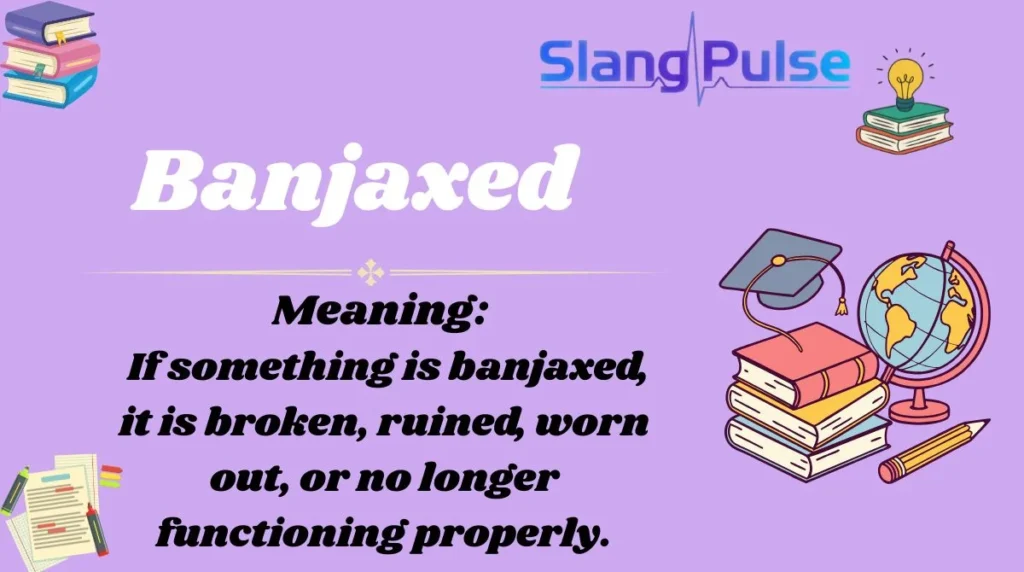
- Meaning: If something is banjaxed, it is broken, ruined, worn out, or no longer functioning properly. It can also describe a person who is completely exhausted.
- When to Use It: Perfect for describing a broken phone, damaged object, or someone who has had an exhausting day.
- When NOT to Use It: Avoid it if your audience is unlikely to understand regional Irish English.
- Example in Conversation:
- A: “Is the old laptop working?”
- B: “No, it’s completely banjaxed.”
- Is It Still Trending? Yes. It is informal but remains recognisable.
7. Gas
- Meaning: In Irish English, calling something gas means it is funny, entertaining, amusing, or great fun. It is not necessarily referring to fuel or anything physical.
- When to Use It: Use it when reacting to a funny person, story, situation, or unexpected event.
- When NOT to Use It: Context matters because international audiences may interpret “gas” differently.
- Example in Conversation:
- A: “Did you hear what happened at the wedding?”
- B: “Yeah, that was gas!”
- Is It Still Trending? Yes.
8. Sound
- Meaning: When someone is sound, they are dependable, decent, kind, or simply good to deal with. It can also be used as a relaxed way to say something is okay or agreed.
- When to Use It: Great for thanking someone or describing a trustworthy person.
- When NOT to Use It: Don’t confuse it with the literal meaning of “sound” when context is unclear.
- Example in Conversation:
- A: “John gave me a lift home.”
- B: “He’s sound, that lad.”
- Is It Still Trending? Yes.
9. Yoke
- Meaning: A yoke is an informal placeholder for an object when you don’t know, remember, or care to say its exact name. It is similar to saying “thingy” or “that thing.”
- When to Use It: Casual conversations when pointing out or referring to an everyday object.
- When NOT to Use It: Avoid it when precision matters, especially at work or in technical conversations.
- Example in Conversation:
- A: “Can you pass me that yoke beside the kettle?”
- B: “This one?”
- Is It Still Trending? Yes, though strongly informal.
10. Dote
- Meaning: Calling someone a dote expresses affection. It can describe a sweet, lovable, charming, or endearing person, and it is often used warmly rather than romantically.
- When to Use It: Use it when talking affectionately about children, friends, partners, or someone who has done something lovely.
- When NOT to Use It: Don’t assume everyone will interpret it exactly the same way outside Ireland.
- Example in Conversation:
- A: “She brought everyone a little gift.”
- B: “Ah, she’s a dote.”
- Is It Still Trending? Yes.
11. Yer Man / Yer One
- Meaning: Yer man and yer one are informal ways of referring to a particular man or woman, especially when the speaker assumes the listener knows who they mean. The expression is highly dependent on context.
- When to Use It: Use it casually when discussing someone identifiable from the surrounding conversation.
- When NOT to Use It: Don’t rely on it when the listener has no idea who you’re talking about.
- Example in Conversation:
- A: “Who was talking to the manager?”
- B: “Yer man from the office.”
- Is It Still Trending? Yes. It remains part of everyday informal Irish speech.
Generational Slang Comparison
Gen Z Usage
Younger Irish speakers mix established Irish expressions with internet language, memes, abbreviations, and global social-media slang. Traditional expressions such as craic, grand, sound, and gas can coexist naturally with newer digital vocabulary.
Millennials
Millennials commonly move between traditional Irish English and contemporary online speech. Expressions such as eejit, banjaxed, grand, and craic can sound completely natural alongside modern internet slang.
Older Slang Differences
Older speakers may use expressions and turns of phrase that younger people recognise but use less frequently. Some older Irishisms can sound deliberately nostalgic when used by younger speakers. Irish slang has never been static; expressions can fade, return, or change meaning over generations.
How to Use Irish Slang Naturally Without Sounding Awkward
Match the Tone
Slang works best when the mood is relaxed. Grand, sound, and craic can fit friendly conversations, while stronger terms such as gobshite require more confidence about the relationship.
Pay Attention to Context
A phrase can change meaning depending on tone. “I’m grand” may simply mean “I’m okay,” while the same words delivered sarcastically can communicate something very different.
Consider the Social Setting
Irish slang is generally most comfortable in casual conversation, texting, social media, pubs, gatherings, and friendly workplaces. Formal documents, academic writing, and professional correspondence usually call for standard English.
Common Irish Slang Mistakes
Using Outdated Slang
Not every phrase associated with Ireland is equally current. Some expressions survive mainly through older generations, popular culture, or stereotypical portrayals.
Using Slang in Formal Writing
Even familiar expressions such as craic, eejit, or feck can be inappropriate in formal reports, applications, or professional documents.
Overusing Slang
One of the fastest ways to sound unnatural is to put an Irish expression into every sentence. Native speakers choose slang according to context rather than deliberately decorating their speech with it.
Practice Section
Fill in the Blanks
- “What’s the ______ tonight?”
- “Don’t worry about it. It’s ______.”
- “He forgot his own birthday—what an ______.”
- “My phone is completely ______.”
- “She’s a real ______ for helping everyone.”
- “That story was absolutely ______.”
- “Your brother is very ______; he always helps people.”
- “Pass me that ______ beside the television.”
Choose the Correct Slang
1. Which word can mean fun or entertaining conversation?
A. Yoke
B. Craic
C. Dote
D. Banjaxed
2. Which term describes something broken or worn out?
A. Sound
B. Gas
C. Banjaxed
D. Grand
3. Which word can affectionately describe a lovely person?
A. Dote
B. Gobshite
C. Feck
D. Yoke
4. If someone is described as “sound,” what does it usually suggest?
A. They are noisy
B. They are dependable or decent
C. They are confused
D. They are exhausted
5. Which expression can refer to an unnamed object?
A. Craic
B. Eejit
C. Yoke
D. Grand
Rewrite These Formal Sentences Into Irish Slang
- Formal: “Everything is fine; there is no problem.”
Slang: “It’s ______.” - Formal: “The old computer is completely broken.”
Slang: “The old computer is completely ______.” - Formal: “That person is very foolish.”
Slang: “What an ______.”
FAQs
What is the most famous Irish slang word?
Craic is probably the best-known Irish slang term internationally. It refers to fun, social enjoyment, conversation, or what is happening.
What does “craic” mean in Ireland?
It can mean fun, entertaining conversation, social atmosphere, or simply news and happenings, depending on context.
What does “grand” mean in Irish slang?
Grand usually means okay, fine, satisfactory, or no problem. Its exact emotional meaning depends on tone.
What does “eejit” mean?
Eejit means a foolish or silly person and is often used humorously rather than as a serious insult.
Is “feck” a swear word?
Feck is generally a milder Irish expletive and is often used humorously or to express frustration.
Do Irish people still use slang today?
Yes. Many traditional Irish English expressions remain in everyday use, while younger speakers continually combine them with newer internet and global slang.
Conclusion
Irish slang brings humour, personality, warmth, and cultural identity into everyday communication.
Words such as craic, grand, eejit, sound, and gas remain useful because they often communicate an attitude or social feeling that a direct English translation cannot fully capture.
At the same time, slang is highly dependent on tone, relationship, generation, and setting. The best approach is not to force expressions into conversation but to listen to how people actually use them.
Whether you’re chatting with friends, exploring Irish culture, watching Irish media, or communicating online, understanding these expressions can make Irish English much easier to follow.
Use the language naturally, respect its context, and remember that authentic slang evolves with the people who speak it.

Aira is a content writer and language enthusiast at SlangPulse, specializing in internet slang, social media trends, and modern digital communication