Nicaragua has a lively Spanish-speaking culture where everyday conversation often sounds warmer, more playful, and more expressive than the Spanish found in textbooks.
Nicaragua slang—often called Nicaraguanismos—helps people show familiarity, humor, surprise, approval, annoyance, and local identity without sounding overly formal. Words such as maje, tuani, chunche, and ideay can completely change the feel of an ordinary conversation.
Slang is never frozen. Younger speakers pick up expressions from music, memes, TikTok, gaming, messaging, and neighboring countries, while older expressions remain alive in families and communities.
Some terms also change meaning depending on tone or situation. For example, maje can sound friendly between friends but insulting when said aggressively.
Learning these expressions is useful for travelers, Spanish learners, online communities, and anyone interested in Nicaraguan culture. The key is not simply memorizing words. Understanding who says them, when they say them, and how they sound is what makes slang feel natural.
Quick Reference Table
| Slang Term | Meaning | Tone | Age Group | Online/Offline Usage |
|---|---|---|---|---|
| Maje | Dude, guy, buddy | Casual | Young–Adult | Both |
| Tuani | Cool, great | Positive | Young–Adult | Both |
| Chunche | Thing, object, thingamajig | Casual | All ages | Both |
| Ideay | What’s up? / Well then? | Casual | All ages | Both |
| Diacachimba | Really cool or excellent | Casual | Young–Adult | Both |
| Chele/Chela | Light-skinned or blond person | Informal | All ages | Mostly offline |
| Jato | House or home | Casual | Young–Adult | Both |
| Pisto | Money | Informal | Young–Adult | Both |
| Pegue | Job or work | Casual | Adult/Young | Mostly offline |
| Chavalo/Chavala | Young person, kid | Casual | All ages | Both |
| Tapudo/Tapuda | Bigmouth, gossip, liar | Negative | All ages | Both |
| Cuecho | Gossip | Informal | All ages | Both |
| Bacanal | Party or big celebration | Casual | Young–Adult | Both |
| Chinelas | Flip-flops | Casual | All ages | Both |
| Goma | Hangover | Informal | Adult/Young | Both |
| Salvaje | Awesome, impressive | Positive | Young–Adult | Both |
| Pinche | Stingy, cheap | Negative | All ages | Both |
| No hay falla | No problem | Relaxed | All ages | Both |
These meanings reflect documented Nicaraguan usage, although pronunciation, frequency, and nuance can vary by speaker, generation, and region.
Maje
- Meaning: Maje is one of the most recognizable casual terms in Nicaraguan Spanish. Depending on tone, it can mean “dude,” “guy,” or “buddy,” but it can also refer dismissively to someone who is acting foolish.
- When to Use It: Use it among friends or in relaxed conversations where informal language is expected.
- When NOT to Use It: Avoid addressing a stranger, senior professional, teacher, or official with it unless you already know the person welcomes casual speech.
- Example in Conversation:
—¿Qué hacés, maje?
—Aquí tranquilo, ¿y vos? - Is It Still Trending? Yes. It remains a familiar part of casual Nicaraguan speech.
Tuani
- Meaning: Tuani describes something that is cool, excellent, enjoyable, or simply good. It works naturally for everything from an event to an outfit or a plan.
- When to Use It: Drop it when you genuinely like something or want to say everything is going well.
- When NOT to Use It: Formal reports, academic writing, and professional correspondence are better served by standard Spanish.
- Example in Conversation:
—¿Qué tal estuvo el concierto?
—¡Estuvo tuani! - Is It Still Trending? Yes. It remains one of the best-known Nicaraguan expressions for approval.
Chunche
- Meaning: Chunche is the wonderfully flexible Nicaraguan equivalent of “thingamajig,” “thing,” or “that object.” It is especially useful when the exact name of an object escapes you.
- When to Use It: Casual conversations, especially when pointing at an unidentified or unimportant object.
- When NOT to Use It: Avoid it when precision matters, such as instructions, technical documents, or professional communication.
- Example in Conversation:
—Pasame ese chunche de ahí.
—¿Este pequeño? - Is It Still Trending? Yes. It remains deeply recognizable in everyday Nicaraguan speech.
Ideay
- Meaning: Ideay is an expressive conversational word that can convey “What’s up?”, “Well then?”, “What happened?”, or mild surprise. Its exact meaning comes from the situation and intonation.
- When to Use It: Use it when greeting someone casually or reacting to unexpected news.
- When NOT to Use It: It is not suitable for formal letters, official statements, or polished business writing.
- Example in Conversation:
—¡Ideay! ¿No venís con nosotros?
—No puedo hoy, tengo trabajo. - Is It Still Trending? Yes. It continues to appear in contemporary Nicaraguan speech.
Diacachimba
- Meaning: Diacachimba is an emphatic way of saying something is very good, exciting, or impressive. You may also encounter spelling variations such as deacachimba.
- When to Use It: Friends may use it when praising a party, outfit, performance, idea, or experience.
- When NOT to Use It: Skip it in formal or unfamiliar social environments until you understand the speaker’s style.
- Example in Conversation:
—¿Viste la moto nueva?
—¡Está diacachimba! - Is It Still Trending? Yes. It remains recognizable as a distinctly informal Nicaraguan expression.
Chele / Chela
- Meaning: Chele for a man and chela for a woman can describe someone who is light-skinned or blond. Context determines whether it sounds like a neutral nickname or a more personal label.
- When to Use It: Casual settings where descriptive nicknames are normal.
- When NOT to Use It: Don’t assume everyone appreciates comments about their appearance, particularly with strangers.
- Example in Conversation:
—¿Quién es el chele de la foto?
—Es un amigo de Managua. - Is It Still Trending? Yes. The terms remain established in Nicaraguan usage.
Jato
- Meaning: Jato is an informal way to refer to a house or home. It gives a sentence a relaxed, conversational feel.
- When to Use It: Among friends when talking casually about where someone lives or where people are meeting.
- When NOT to Use It: Use casa instead in formal communication.
- Example in Conversation:
—¿Dónde nos vemos?
—Caéte a mi jato después de las ocho. - Is It Still Trending? Yes. It is still recognized as informal Nicaraguan vocabulary.
Pisto
- Meaning: Pisto means money or cash. It is one of those informal terms that makes an ordinary financial conversation sound much more relaxed.
- When to Use It: Casual conversations about spending, saving, prices, or having enough money.
- When NOT to Use It: Avoid it in financial documents, banking correspondence, or formal business writing.
- Example in Conversation:
—¿Tenés pisto para el viaje?
—Sí, ya ahorré bastante. - Is It Still Trending? Yes. It remains a familiar colloquial term for money.
Pegue
- Meaning: Pegue refers to a job, workplace, or employment. It is especially natural in casual talk about working or finding employment.
- When to Use It: Use it when chatting with friends or acquaintances about work.
- When NOT to Use It: Choose trabajo in résumés, applications, interviews, and professional documents.
- Example in Conversation:
—¿Ya encontraste pegue?
—Sí, empiezo el lunes. - Is It Still Trending? Yes. It remains a recognized colloquial employment term in Nicaragua.
Chavalo / Chavala
- Meaning: Chavalo and chavala are informal terms for a boy, girl, young person, or kid. The exact age implied can depend on context.
- When to Use It: Everyday conversations involving children, teenagers, or younger people.
- When NOT to Use It: Be careful when addressing adults who may interpret it as overly familiar or patronizing.
- Example in Conversation:
—¿Quiénes son esos chavalos?
—Son los hijos de mi vecino. - Is It Still Trending? Yes. It remains established across generations.
Tapudo / Tapuda
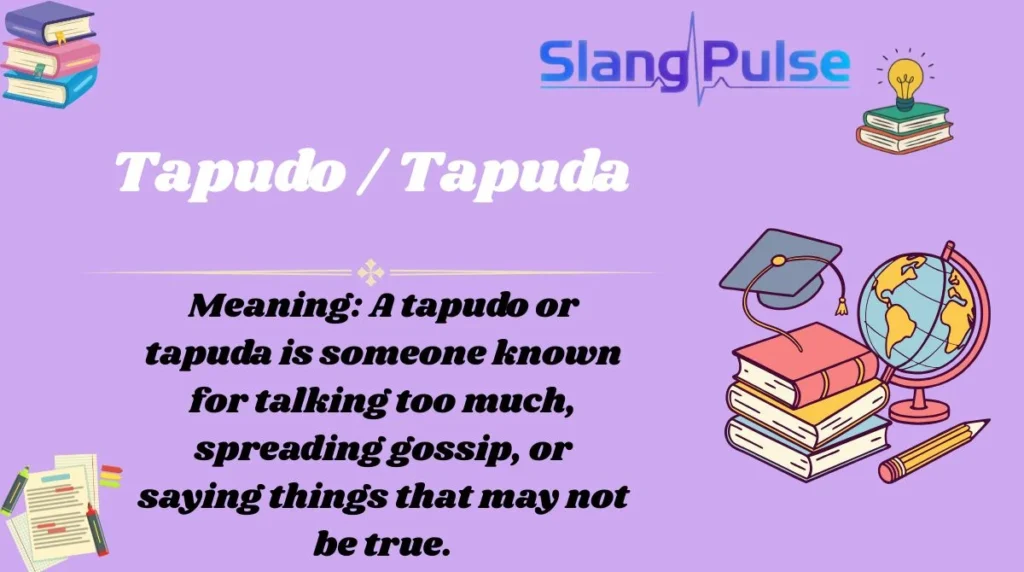
- Meaning: A tapudo or tapuda is someone known for talking too much, spreading gossip, or saying things that may not be true.
- When to Use It: Mostly when joking about or criticizing someone’s tendency to talk or gossip.
- When NOT to Use It: Don’t casually label a stranger this way; it can sound insulting.
- Example in Conversation:
—No le contés el secreto a aquel maje.
—¿Por qué?
—Porque es bien tapudo. - Is It Still Trending? Yes. The expression remains recognizable in informal Nicaraguan Spanish.
Cuecho
- Meaning: Cuecho is associated with gossip or a piece of gossip. It is useful when talking about rumors, private stories, or someone else’s business.
- When to Use It: Informal conversations with people who understand the local expression.
- When NOT to Use It: Avoid it in serious professional discussions where “rumor” or “gossip” is clearer.
- Example in Conversation:
—¿Cuál es el cuecho?
—Dicen que se van a mudar. - Is It Still Trending? Yes. It remains a recognizable Nicaraguan colloquialism.
Bacanal
- Meaning: Bacanal refers to a party, celebration, or lively social gathering. It carries more energy than simply saying fiesta.
- When to Use It: Casual talk about a fun night out, celebration, or big gathering.
- When NOT to Use It: Avoid it in formal invitations or official event descriptions unless the event itself uses the term.
- Example in Conversation:
—¿Qué hacés el sábado?
—Voy a un bacanal con unos amigos. - Is It Still Trending? Yes. It remains part of informal Nicaraguan vocabulary.
Chinelas
- Meaning: Chinelas are flip-flops or casual sandals. The word is particularly useful when talking about relaxed footwear.
- When to Use It: Everyday conversations about clothing, beaches, home, or casual outings.
- When NOT to Use It: There is little issue with casual use, but sandalias may be clearer to international Spanish speakers.
- Example in Conversation:
—¿Dónde están mis chinelas?
—Al lado de la puerta. - Is It Still Trending? Yes. It remains an established everyday term.
Goma
- Meaning: In the expression estar de goma, goma means a hangover. It is the word you may hear after a long night of drinking.
- When to Use It: Casual conversations among adults discussing how they feel after drinking.
- When NOT to Use It: Avoid the expression in professional settings or when the topic requires medical precision.
- Example in Conversation:
—¿Cómo amaneciste?
—De goma. Anoche fue demasiado. - Is It Still Trending? Yes. The expression remains recognized in Nicaraguan Spanish.
Salvaje
- Meaning: In informal Nicaraguan usage, salvaje can be positive rather than literal, meaning impressive, excellent, or awesome.
- When to Use It: Use it to react enthusiastically to someone’s performance, achievement, or something impressive.
- When NOT to Use It: Don’t assume the listener will interpret it positively outside the right context.
- Example in Conversation:
—Metió tres goles él solo.
—¡Salvaje ese chavalo! - Is It Still Trending? Yes. The positive colloquial sense remains documented in Nicaraguan Spanish.
Pinche
- Meaning: Pinche can describe someone who is stingy or unwilling to spend money. It is not simply another word for “cheap” in every context.
- When to Use It: Mostly when teasing or criticizing someone about being overly reluctant to spend.
- When NOT to Use It: Avoid it with people you do not know well because it can sound openly insulting.
- Example in Conversation:
—Invitá vos esta vez.
—Ese maje es bien pinche, nunca paga. - Is It Still Trending? Yes. It remains a recognized colloquial term.
No Hay Falla
- Meaning: No hay falla is a relaxed way to say “no problem,” “no worries,” or “that’s fine.” It communicates that an arrangement is acceptable.
- When to Use It: Casual requests, plans, favors, and friendly conversations.
- When NOT to Use It: Use more standard wording in formal customer service, legal, academic, or official communication.
- Example in Conversation:
—¿Podés traerme el libro mañana?
—Sí, no hay falla. - Is It Still Trending? Yes. It remains a familiar informal expression.
Generational Slang Comparison
Gen Z Usage
Gen Z speakers are more likely to blend established Nicaraguan expressions with internet language, memes, abbreviations, emojis, and slang imported through TikTok, Instagram, gaming, and messaging. Traditional words such as maje, tuani, and chunche can coexist with newer digital expressions.
Millennials
Millennials often sit between traditional Nicaraguan vocabulary and newer online slang. They may comfortably use expressions learned from family while also adapting language picked up through social media and popular culture.
Older Slang Differences
Older speakers may preserve expressions that younger people use less frequently. Some words also carry stronger regional or traditional associations. This is why knowing a word’s dictionary meaning is not enough—the speaker’s age, relationship with you, and tone can change how it lands.
How to Use Slang Naturally Without Sounding Awkward
Match the Tone
Slang should sound like part of the conversation rather than something inserted for effect. If everyone is speaking casually, a word such as maje or tuani may fit naturally.
Read the Context
A term can have different emotional weight depending on delivery. Maje, for example, may be friendly between close friends but disrespectful when said aggressively.
Consider the Social Setting
Use informal vocabulary with people and communities where it is accepted. In classrooms, interviews, official meetings, applications, and business writing, standard Spanish is usually safer.
Common Slang Mistakes
Using Outdated Slang
Not every expression has the same popularity across generations. A word that sounds natural to an older speaker may feel unusual or old-fashioned to younger listeners.
Using Slang in Formal Writing
Even authentic Nicaraguan slang can be inappropriate in a résumé, academic essay, official email, contract, or formal report. Context matters more than showing off vocabulary.
Overusing Slang
A conversation filled with slang can sound forced, especially when the speaker is not a native user. One naturally placed expression usually works better than several unfamiliar words packed into one sentence.
Practice Section
Fill in the Blanks
- “¿Qué ________, maje?” — “¿Todo bien?”
- “Ese concierto estuvo ________.”
- “Pasame ese ________ de la mesa.”
- “¡________! ¿Ya te vas?”
- “No tengo suficiente ________ para comprarlo.”
- “¿Ya encontraste ________?”
- “Anoche salí y hoy estoy de ________.”
- “¿Podés ayudarme mañana?” — “Sí, ________.”
Choose the Correct Slang
- Which word can mean “dude” or “guy”?
A. Goma
B. Maje
C. Pisto
D. Chinelas - Which expression means “no problem”?
A. No hay falla
B. Cuecho
C. Tapudo
D. Pegue - What can chunche refer to?
A. Money
B. A job
C. A thing or object
D. A party - Which term can describe someone who gossips or talks too much?
A. Tuani
B. Tapudo
C. Jato
D. Salvaje - What does tuani generally express?
A. Anger
B. A hangover
C. Approval or something cool
D. Gossip
Rewrite These Formal Sentences
- Formal: “Everything is fine; there is no problem.”
Slang: “Todo está bien, no hay falla.” - Formal: “What is happening, my friend?”
Slang: “¿Ideay, maje?” - Formal: “The party was excellent.”
Slang: “El bacanal estuvo tuani.”
FAQs
What Is Nicaragua Slang Called?
Nicaraguan slang and regional expressions are often referred to as Nicaraguanismos.
What Does Maje Mean in Nicaragua?
Maje commonly means “dude,” “guy,” or “buddy,” although tone can make it insulting.
What Does Tuani Mean in Nicaragua?
Tuani generally means cool, great, good, or excellent.
What Does Chunche Mean?
Chunche is an informal word for a thing, object, or thingamajig when the specific name is unknown or unnecessary.
Is Nicaraguan Slang Used Online?
Yes. Traditional slang continues to appear in messaging and social media, while younger speakers also mix it with broader internet vocabulary.
Is Nicaraguan Slang Appropriate in Formal Situations?
Usually not. Most slang is best reserved for relaxed conversations, friends, family, and informal online communication.
Conclusion
Nicaragua slang is more than a collection of unusual Spanish words. Expressions such as maje, tuani, chunche, ideay, and no hay falla reveal how language carries humor, familiarity, identity, and local culture.
Their meanings can shift with tone, generation, relationship, and setting, so context is just as important as vocabulary.
The smartest way to learn Nicaraguan slang is to listen first, notice who uses each expression, and then introduce it naturally.
You do not need to force every new word into conversation. A small number of expressions used confidently and appropriately will sound much more authentic than a long list of memorized terms.

Aira is a content writer and language enthusiast at SlangPulse, specializing in internet slang, social media trends, and modern digital communication