Instagram has its own fast-moving language. A comment such as “ate,” “IYKYK,” “delulu,” or “no cap” can communicate an entire reaction in just a few characters.
That is the appeal of slang: it makes communication quicker, more expressive, humorous, and closely tied to online culture.
Slang is informal language that develops inside communities and changes as those communities change. Instagram helps that process happen at remarkable speed.
A phrase can begin in a niche community, spread through Reels and comments, appear in memes, and eventually enter everyday conversations.
Some expressions remain useful for years, while others become outdated almost as quickly as they become viral. Current social-media language continues to mix older internet expressions with newer Gen Z and Gen Alpha vocabulary.
Understanding Instagram slang is therefore about more than memorizing definitions. You also need to recognize tone, context, audience, and irony. The 17 terms below focus on expressions you are likely to encounter in captions, comments, Stories, Reels, DMs, and casual conversations.
Quick Reference Table
| Slang Term | Meaning | Tone | Age Group | Online/Offline Usage |
|---|---|---|---|---|
| Ate | Did something extremely well | Positive | Gen Z, younger Millennials | Both |
| Slay | Performed or looked excellent | Positive | Gen Z, Millennials | Both |
| IYKYK | Insider understanding | Playful | Gen Z, Millennials | Mostly online |
| No Cap | Seriously; honestly | Direct | Gen Z | Both |
| Delulu | Playfully unrealistic or overly hopeful | Humorous | Gen Z | Both |
| Rizz | Romantic charm or confidence | Playful | Gen Z | Both |
| Mid | Average or disappointing | Critical | Gen Z | Both |
| POV | “Point of view” framing | Creative | Gen Z, Millennials | Mostly online |
| FYP | For You Page | Casual | Gen Z, Gen Alpha | Online |
| GRWM | Get Ready With Me | Casual | Gen Z, Millennials | Online |
| Main Character | Acting as though life is your story | Playful | Gen Z, Millennials | Both |
| Sus | Suspicious or questionable | Playful | Gen Z | Both |
| Fire | Excellent or exciting | Positive | Gen Z, Millennials | Both |
| Ghosting | Suddenly stopping communication | Negative | Gen Z, Millennials | Both |
| Flex | Showing off | Neutral/negative | Gen Z, Millennials | Both |
| Aura | Social presence or cool factor | Playful | Gen Z, Gen Alpha | Both |
| Pookie | Affectionate nickname | Cute/playful | Younger users | Both |
17 Instagram Slang Terms
Ate
- Meaning: “Ate” is praise for someone who absolutely nailed something. On Instagram, it commonly appears under outfit photos, makeup looks, performances, edits, or clever captions.
- When to Use It: Drop it when someone’s post, look, performance, or response is genuinely impressive.
- When NOT to Use It: Avoid using it for ordinary or mediocre content just because you want to sound trendy.
- Example in Conversation:
- A: “Did you see her new outfit Reel?”
- B: “She ate. No notes.”
- Is It Still Trending? Yes. It remains recognizable and widely used in online reactions.
Slay
- Meaning: “Slay” signals strong approval, especially when someone looks confident, stylish, talented, or impressive.
- When to Use It: Use it for a great outfit, performance, photo, achievement, or confident moment.
- When NOT to Use It: Don’t force it into serious conversations where enthusiastic internet slang would feel inappropriate.
- Example in Conversation:
- A: “I finally posted my graduation pictures.”
- B: “Okayyy, slay!”
- Is It Still Trending? Yes. It is established internet slang rather than a brand-new expression.
IYKYK
- Meaning: Short for “If you know, you know.” It hints at an inside joke, shared memory, private reference, or experience that only certain people will understand.
- When to Use It: Add it to captions or comments when the context is intentionally left unexplained.
- When NOT to Use It: Don’t use it when everyone genuinely needs the information to understand your message.
- Example in Conversation:
- A: “That little café on the corner…”
- B: “IYKYK 😭”
- Is It Still Trending? Yes. It remains familiar across Instagram and other social platforms.
No Cap
- Meaning: “No cap” means you’re being completely serious or truthful. It is often used to emphasize that a statement is not exaggerated.
- When to Use It: Use it when you want to stress honesty in a casual conversation.
- When NOT to Use It: Skip it in formal emails, academic writing, or professional reports.
- Example in Conversation:
- A: “Was the concert actually that good?”
- B: “No cap, it was incredible.”
- Is It Still Trending? Yes, but established. It is recognizable beyond Instagram and remains part of casual internet vocabulary.
Delulu
- Meaning: A playful shortening of “delusional.” On Instagram, it usually describes someone being unrealistically optimistic, especially about romance, fame, success, or an imagined outcome.
- When to Use It: Use it jokingly when you knowingly entertain an unlikely possibility.
- When NOT to Use It: Don’t use the word to dismiss someone’s genuine mental-health concerns or serious beliefs.
- Example in Conversation:
- A: “He liked my Story, so we’re basically dating.”
- B: “Girl, you’re being delulu.”
- Is It Still Trending? Yes. It remains a visible part of current online slang.
Rizz
- Meaning: “Rizz” refers to charm, especially the ability to attract or impress someone romantically.
- When to Use It: Use it when joking about someone’s flirting skills or natural charisma.
- When NOT to Use It: Avoid forcing it into every conversation simply because it became popular.
- Example in Conversation:
- A: “He got her number in five minutes.”
- B: “Bro has serious rizz.”
- Is It Still Trending? Yes. The term remains widely recognizable in youth and internet culture.
Mid
- Meaning: “Mid” is a blunt way of calling something average, underwhelming, or not worth the hype.
- When to Use It: It works when discussing entertainment, food, fashion, trends, or content that failed to impress.
- When NOT to Use It: Be careful when reviewing someone’s personal effort; it can sound unnecessarily dismissive.
- Example in Conversation:
- A: “How was the new movie?”
- B: “Honestly? Mid.”
- Is It Still Trending? Yes, but established. It continues to appear in contemporary slang lists and casual online conversation.
POV
- Meaning: “POV” means “point of view.” On Instagram, it often introduces a fictional scenario or puts the viewer inside a particular situation.
- When to Use It: Use it for Reels, memes, or captions built around an imagined perspective.
- When NOT to Use It: Don’t treat every ordinary caption as a POV simply to make it sound more social-media-like.
- Example in Conversation:
- A: “POV: you said you wouldn’t buy anything.”
- B: “And somehow I left with three bags.”
- Is It Still Trending? Yes. It remains deeply established in social-media content formats.
FYP
- Meaning: FYP stands for “For You Page.” Although strongly associated with TikTok, people sometimes use it more broadly when talking about algorithmically recommended social content.
- When to Use It: Use it when discussing discovery, viral content, or recommendation feeds.
- When NOT to Use It: Don’t assume every Instagram user means Instagram specifically when they say FYP.
- Example in Conversation:
- A: “How did this Reel suddenly get so many views?”
- B: “The algorithm pushed it to everyone’s feed.”
- Is It Still Trending? Yes, but platform-dependent.
GRWM
- Meaning: GRWM means “Get Ready With Me.” It usually labels content showing someone getting dressed, doing makeup, styling their hair, or preparing for an event.
- When to Use It: Use it in captions, Reel titles, or conversations about preparation-style content.
- When NOT to Use It: Avoid the abbreviation when talking to someone unfamiliar with social-media shorthand.
- Example in Conversation:
- A: “What are you posting tonight?”
- B: “A GRWM before the wedding.”
- Is It Still Trending? Yes. The format remains common in creator culture.
Main Character
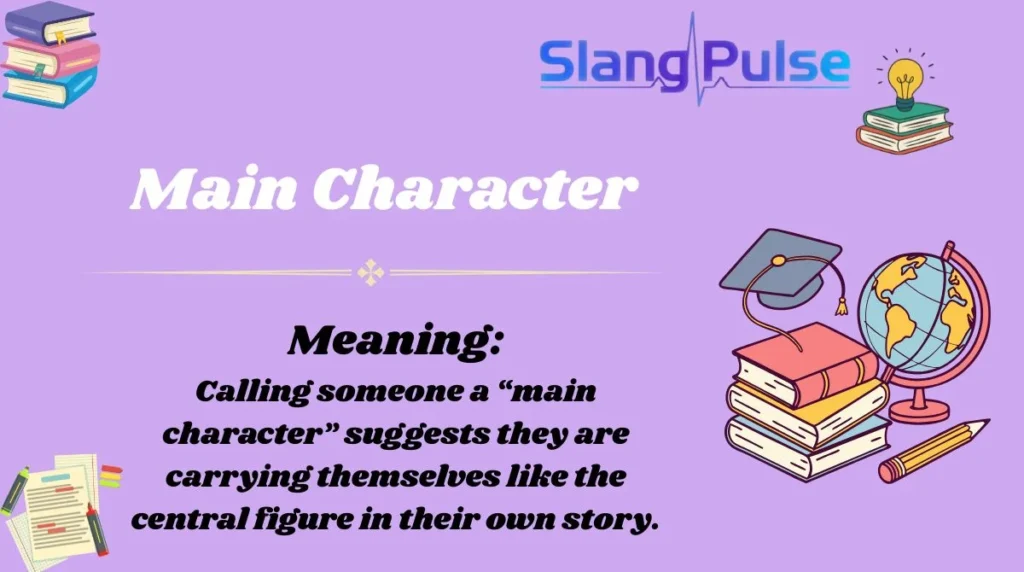
- Meaning: Calling someone a “main character” suggests they are carrying themselves like the central figure in their own story. It can be sincere, playful, or slightly sarcastic.
- When to Use It: Use it for confident solo moments, cinematic posts, travel pictures, or someone enjoying their life unapologetically.
- When NOT to Use It: Don’t use it to excuse genuinely selfish behavior.
- Example in Conversation:
- A: “She went on a solo trip and posted sunset photos.”
- B: “Main-character energy for real.”
- Is It Still Trending? Yes, but established.
Sus
- Meaning: “Sus” is short for suspicious. It became especially popular through gaming culture and later spread widely across social media.
- When to Use It: Use it when someone’s behavior, explanation, or situation seems questionable.
- When NOT to Use It: Avoid it when making a serious accusation where clear language matters.
- Example in Conversation:
- A: “He said he didn’t eat the cake.”
- B: “That’s sus. There are crumbs on his shirt.”
- Is It Still Trending? Yes, but established.
Fire
- Meaning: “Fire” describes something excellent, exciting, stylish, or impressive. An Instagram Reel, song, outfit, or photograph can all be “fire.”
- When to Use It: Use it for enthusiastic approval.
- When NOT to Use It: Don’t repeat it under every post; constant praise quickly loses impact.
- Example in Conversation:
- A: “Did you hear their new track?”
- B: “Yeah, that song is fire.”
- Is It Still Trending? Yes, but established. It has been part of internet and youth slang for years.
Ghosting
- Meaning: Ghosting describes suddenly cutting off communication without explanation. It is especially common when discussing dating, friendships, or online interactions.
- When to Use It: Use it when someone stops responding or disappears without explanation.
- When NOT to Use It: Don’t label a short delay in replying as ghosting.
- Example in Conversation:
- A: “He stopped replying after three dates.”
- B: “Sounds like he ghosted you.”
- Is It Still Trending? Yes. The word is now widely understood outside youth culture.
Flex
- Meaning: To “flex” is to show off something, whether that is money, clothing, achievements, travel, possessions, or status.
- When to Use It: It works when someone is deliberately showing something impressive.
- When NOT to Use It: Don’t automatically call ordinary sharing a flex; sometimes people are simply documenting their lives.
- Example in Conversation:
- A: “Why did he post five pictures of the new car?”
- B: “He’s definitely flexing.”
- Is It Still Trending? Yes, but established.
Aura
- Meaning: “Aura” refers to someone’s perceived coolness, confidence, presence, or social energy. Online, people may jokingly talk about gaining or losing “aura points.”
- When to Use It: Use it playfully when describing someone’s presence or an especially smooth moment.
- When NOT to Use It: Don’t treat it as a serious measure of someone’s personality or worth.
- Example in Conversation:
- A: “He walked in late and still looked completely confident.”
- B: “Bro somehow gained aura.”
- Is It Still Trending? Yes. Aura remains prominent in current youth-oriented online language.
Pookie
- Meaning: “Pookie” is an affectionate, deliberately cute nickname. Depending on the relationship, it can sound romantic, friendly, teasing, or exaggerated for comedic effect.
- When to Use It: Use it with close friends, partners, or in playful online conversations where that level of familiarity fits.
- When NOT to Use It: Avoid calling strangers, coworkers, teachers, or clients “pookie.”
- Example in Conversation:
- A: “Pookie, you really bought another hoodie?”
- B: “It was on sale! 😭”
- Is It Still Trending? Yes, especially among younger users. Current youth-slang coverage continues to mention affectionate terms such as “pookie.”
Generational Slang Comparison
Gen Z Usage
Gen Z tends to use Instagram slang as a flexible social tool rather than a fixed vocabulary list. Ate, delulu, aura, rizz, IYKYK, and mid can communicate approval, irony, humor, criticism, or shared understanding in just a few words. Meaning often depends heavily on the situation and delivery.
Millennials
Millennials generally recognize much of today’s Instagram slang because they helped shape earlier internet culture. However, many Millennials are more likely to mix newer expressions with older terms such as LOL, FOMO, YOLO, or throwback.
Older Slang Differences
Older generations often have their own slang traditions, including expressions such as groovy, cool, rad, or far out. The important difference is not that one generation uses slang while another does not. Every generation develops informal language; the vocabulary and speed of change are what differ.
How to Use Slang Naturally Without Sounding Awkward
Match the Tone
Slang works best when it matches the emotional energy of the conversation. “Ate” fits enthusiastic praise, while “mid” communicates disappointment. Choosing the wrong emotional register can make even a familiar word sound strange.
Read the Context
A phrase that works perfectly in an Instagram comment may look unprofessional in an email. Social media gives people more room for humor, abbreviations, emojis, irony, and playful exaggeration.
Consider the Social Setting
Know who you are talking to. Friends may understand “pookie,” “rizz,” or “delulu” immediately, while a client or older relative may interpret the same words literally or simply find them confusing.
Don’t Perform the Slang
The easiest way to sound natural is not to use slang in every sentence. Pick expressions that genuinely fit how you already communicate. Slang works because it feels spontaneous, not because you are trying to prove you know the latest vocabulary.
Common Slang Mistakes
Using Outdated Slang
Not every viral term has a long shelf life. A word can move from popular to overused, ironic, or old-fashioned surprisingly quickly. Internet slang evolves constantly.
Using Slang in Formal Writing
Avoid expressions such as “no cap,” “mid,” or “ate” in academic essays, professional reports, formal applications, and business communication unless the topic specifically requires discussion of slang.
Overusing Slang
A sentence packed with slang can become harder to understand rather than more engaging. One well-placed expression usually sounds more natural than five forced ones.
Practice Section
Fill in the Blanks
- “She absolutely ______ that performance.”
- “No ______, this is the best café I’ve found.”
- “IYKYK” means “If ______, you know.”
- Someone who suddenly stops replying may be ______ you.
- “That movie was ______” means it was average or disappointing.
- “GRWM” means “Get ______ With Me.”
- Someone with strong romantic charm may have serious ______.
- A person showing off their expensive new shoes may be trying to ______.
Choose the Correct Slang
1. Your friend posts an amazing outfit. What fits best?
A. Mid
B. Ate
C. Sus
D. Ghosted
Answer: B. Ate
2. Someone stops replying to your messages for weeks without explanation. What is the best term?
A. Rizz
B. Flex
C. Ghosting
D. Aura
Answer: C. Ghosting
3. Your friend jokingly believes a celebrity will notice their Instagram Story. Which term fits?
A. Delulu
B. Fire
C. POV
D. FYP
Answer: A. Delulu
4. A creator posts a video showing their makeup and outfit routine. What abbreviation fits?
A. IYKYK
B. GRWM
C. GOAT
D. Sus
Answer: B. GRWM
5. Someone’s explanation sounds suspicious. What slang could you use casually?
A. Sus
B. Slay
C. Pookie
D. Ate
Answer: A. Sus
Rewrite Formal Sentences Into Slang
1. Formal: “Her outfit looked exceptionally impressive.”
Slang: “She absolutely ate that look.”
2. Formal: “I am being completely honest with you.”
Slang: “No cap, I’m being serious.”
3. Formal: “The movie was average and did not meet expectations.”
Slang: “Honestly, the movie was mid.”
FAQs
What Is Instagram Slang?
Instagram slang is informal language, abbreviations, and expressions commonly used in captions, comments, DMs, Stories, and Reels.
What Does “Ate” Mean on Instagram?
“Ate” means someone performed exceptionally well, looked great, or delivered something impressive.
What Does IYKYK Mean on Instagram?
IYKYK means “If you know, you know.” It usually points to an inside joke, shared experience, or hidden context.
What Does “Delulu” Mean?
“Delulu” is playful slang derived from “delusional.” It often describes knowingly unrealistic optimism or expectations.
Is Instagram Slang Only Used by Gen Z?
No. Gen Z popularizes many current expressions, but Millennials and older users also understand and use some internet slang.
Does Instagram Slang Change Quickly?
Yes. Social platforms allow expressions to spread rapidly, while memes, creators, communities, and changing online trends constantly introduce new meanings.
Conclusion
Instagram slang is more than a collection of trendy words. It is a fast-changing form of digital communication that helps people express humor, approval, irony, identity, and shared experiences.
Terms such as ate, IYKYK, delulu, rizz, aura, and no cap can make casual communication feel more natural when they are used in the right setting.
The key is context. Understand what a term means, notice how other people use it, and consider who is reading or listening before adding it to your own vocabulary. Slang sounds most natural when it fits the situation instead of being forced into every sentence.
As Instagram culture continues to evolve, some expressions will disappear while others will move into everyday English. Staying aware of that change makes it easier to understand modern online conversations without sounding like you memorized a slang dictionary.

Aira is a content writer and language enthusiast at SlangPulse, specializing in internet slang, social media trends, and modern digital communication